Getting art in line (or something like this)
12.11.2026
Last time I said the heroes will be much harder than the backgrounds. Were they? Not really. But they were pricier, for sure.
The problem with heroes (and NPCs) was the same problem I had with backgrounds - lack of consistency. Each of them came out of a separate Scenario run, and side by side they were all a bit of a different style. Similar, but different. Initially, I was quite happy with them but over time the drift was getting more and more noticeable.
I also did not want to regenerate everything. I was happy with most of the clothing and colors. I just needed images (and animations) to be consistent.
So Claude and I pulled all the heroes and put them on the same image.
That is the simplest trick. Five heroes from five separate runs give you five styles. Five heroes generated in ONE image come out in one style, every time. The main heroes went first, facing forward, arms down, feet together (you know this pose if you ever did 3d modelling)
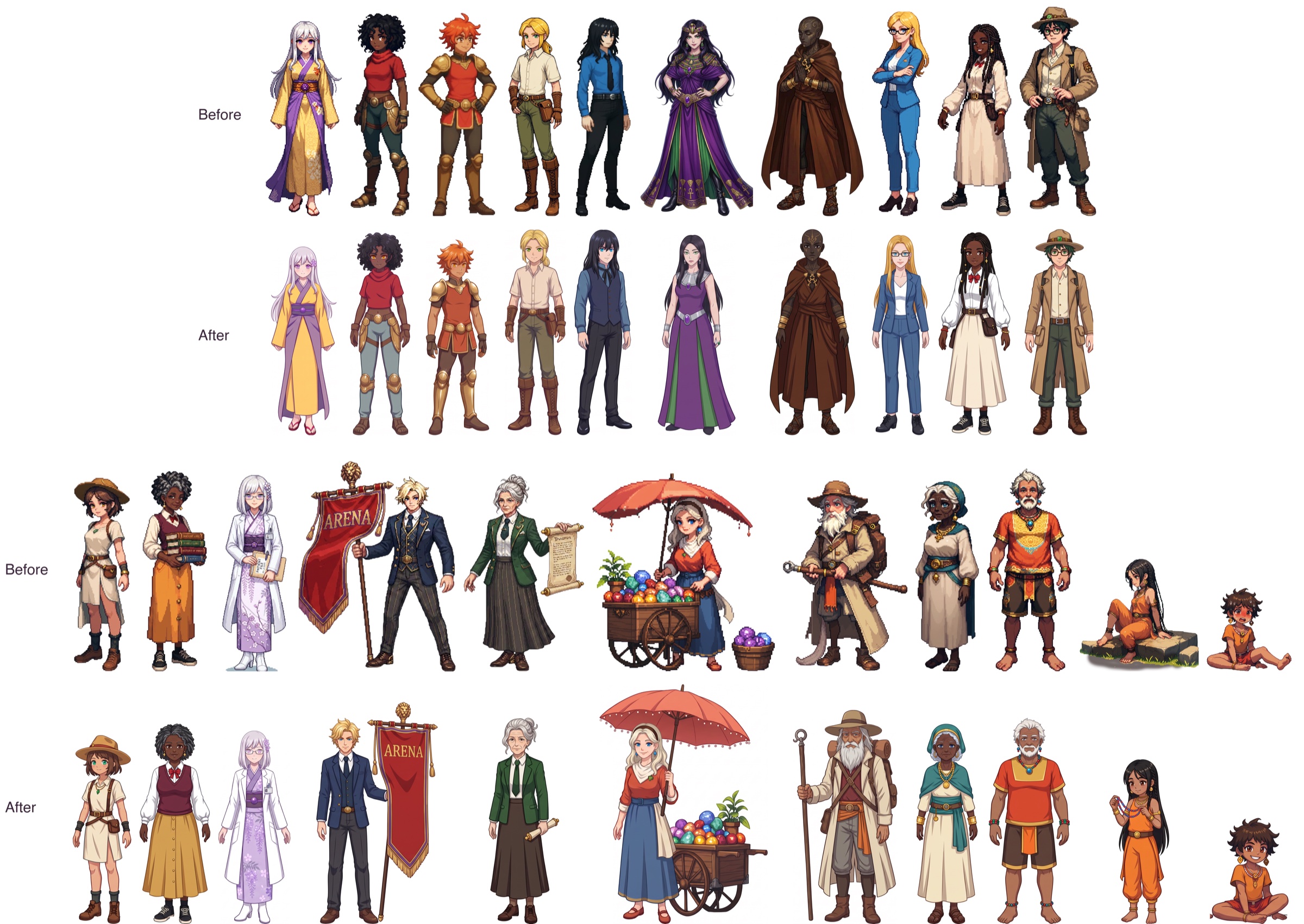
Then we added the NPCs, one by one, choosing the closest as a starting example. There is a catch here: ask for the whole line again with one more person in it, and everybody else changes a little. So each new character was generated into a COPY of the lineup, and then a script cut out the new one and pasted them into the original, which nobody touched.
With every new character, I checked the skin colours and the shadows. I did a bit of Python code for this because why use your brain when you can write a script. It wasn't always enough. For example, skin color loves to drift. One image - a hero is fair, on the next he comes back tanned.
So it was Python code plus my eyes. The code measures every figure: how many heads tall it is, how big the eyes are, how thick the outlines are. No AI inside, same idea as with the backgrounds. And my eyes are there because code can be confidently wrong. Once it told me that one woman's eyes were the correct size. They were half the size of the girl's next to her. Script had measured the shadow under her nose 8(
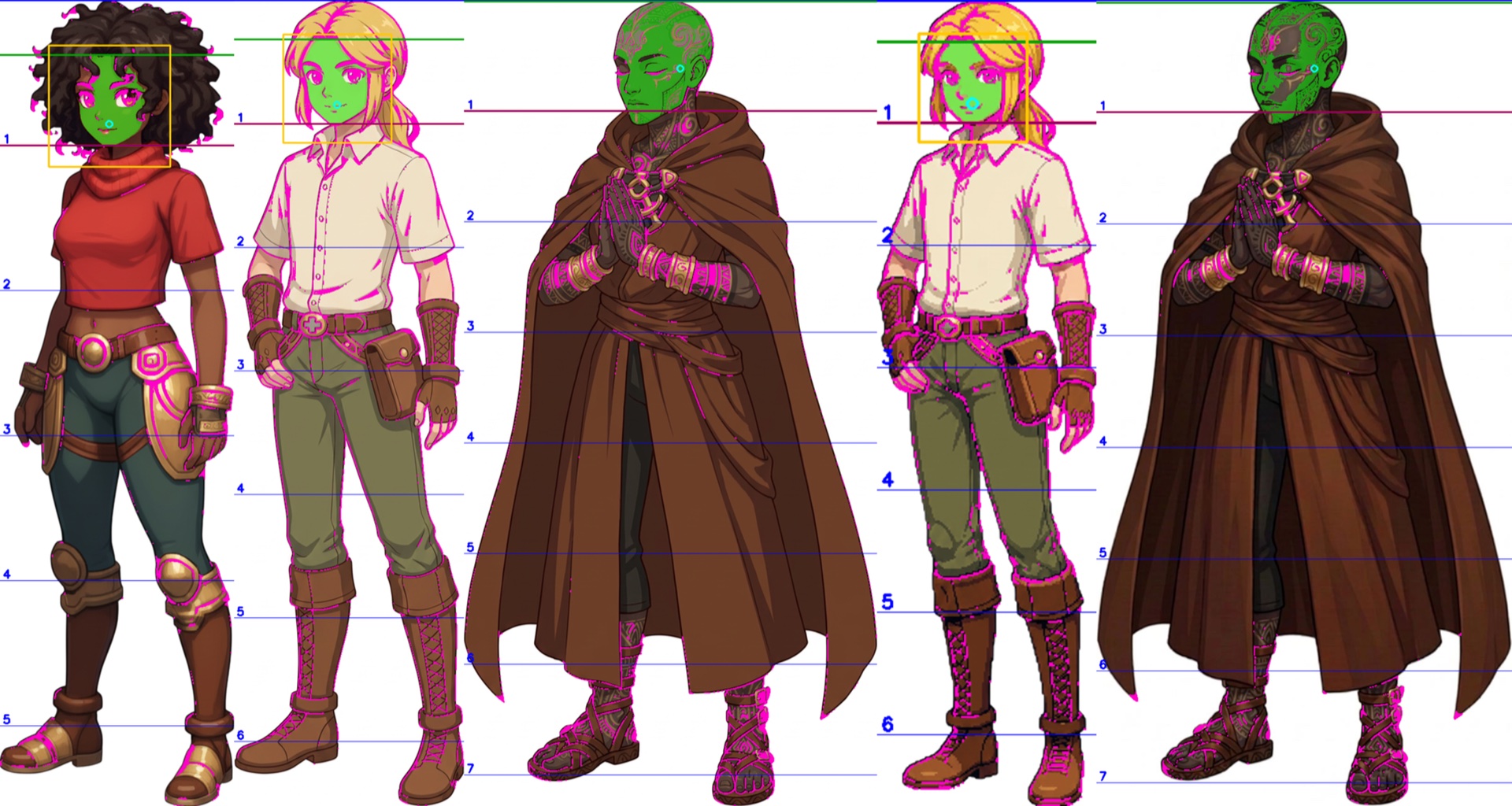
Then we aligned everybody by height and by age. This is important for consistency and for manual checks - see the hero in the line of his own age, then of his own class, then of his own height. This grouping allows you to check the alignment across the board. For example, age groups are kids, teens, adults and the older people. Every group got its own proportions, counted in heads: a kid is about five heads tall, a teenager six and a half, an adult seven and a half - old anime tradition, very helpful in this case. The older people are seven, and their posture and face carry the age.
Side note - If the age is not spelled out, you get a teenager. A woman of about 40 came back as a teenager. A boy of about 10 came back as tall as the heroes.
Outside of a height group, the heights have to differ and before tweaking Claude's first idea of "shorter" was to shrink the whole figure.
After we had an initial lineup, for every character we generated three poses: front, three-quarters, and profile. Clothing started to wander. One NPC wears a backpack, and in one pose the straps were gone. A few times I asked for three views and got four people. We edited every clothing inconsistency we found (yes, yes, that's where the tokens go!)
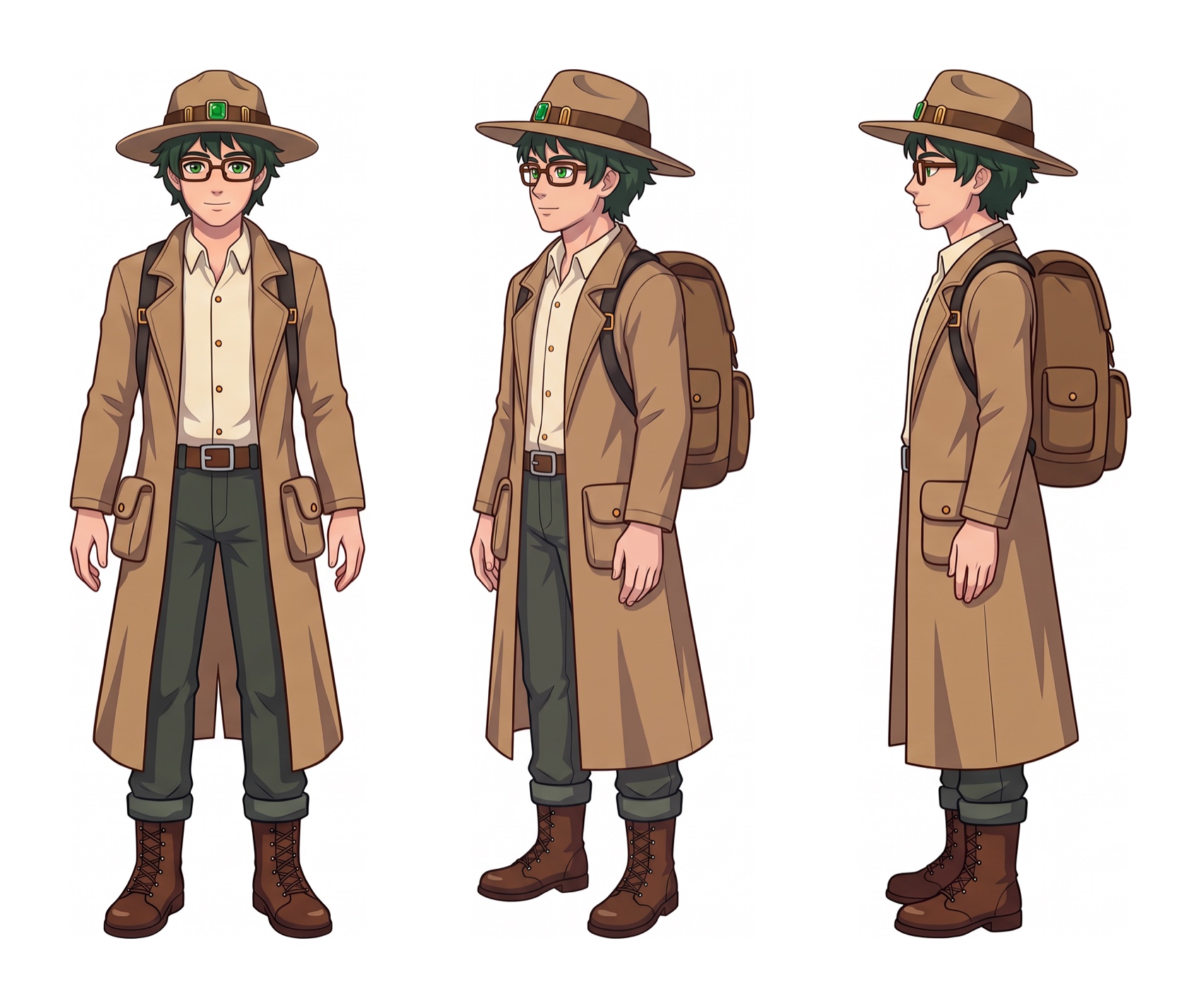
So, did it work? I think it is at the acceptable level for now. It is not perfect: the outlines are similar in thickness, but their colours still differ from character to character. Styles of eyes drawings are not consistent across age and some clothing are more flat than other. But it is better than it was. I think the next iteration has to wait until my balance resets though...